Refugee Camps in North Carolina
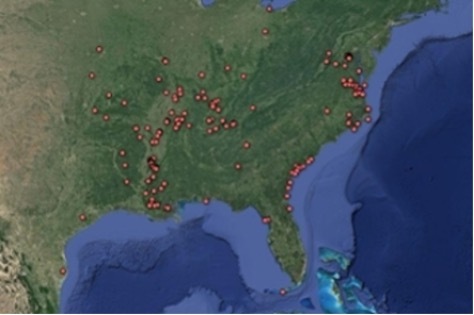
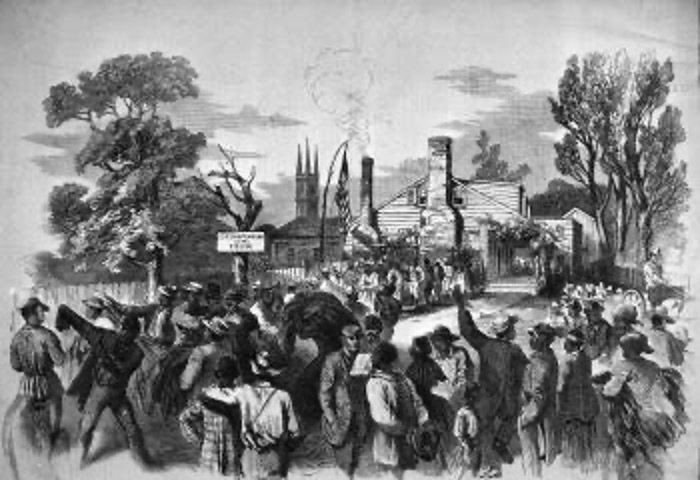
Refugee camps were common even before refugees began arriving in Wilmington. Starting as early as 1862, several small camps were set up throughout the southern states, to provide homes for newly freed African Americans and looking for safety. Without the Freedmen’s Bureau, these camps were constantly searching for ways to secure their safety, as raids from white Southerners were a common occurrence. Nevertheless, these camps offered solace; families were brought together after forced separation and communities began to develop.
These camps were established as a way for displaced individuals to start finding stability. More importantly, the camps were not to offer permanent housing; the goal was to develop an emergency housing system and then encourage individuals to learn skills to live independently. Because of this, the housing and land given were likely subpar and repurposed from previous locations, including abandoned plantations and failed farming projects. However, because of the rising tensions in Southern states, combined with the inability to effectively transition these people, most camps found themselves overrun with residents- both white and black.
North Carolina had several camps, including the largest locations at New Bern, Beaufort, Roanoke, and smaller ones peppered throughout Union camps.[19] The camp outside of New Berne, North Carolina, reports these issues; there was the tendency for white refugees to rely more heavily on government resources like rations, while black refugees were given less than half, and still managed to get by. Assistant Professor Abigail Cooper found that, “1,800 whites received 76 ½ barrels of flour over the course of three months in 1862-63. During the same period, the 7,500 blacks there received 19 barrels.”[20] The effort to rid black refugees of government assistance went as far as partial abandonment. Horace James, Freedmen Bureau Officer, sought to enforce independence in these camps, to a fault. In the Roanoke camp, inadequate housing and clothing options, compounded with overpopulation left, “ no vacant cabins, tents, or barracks…so they had to huddle in a freezing-cold schoolhouse just hoping to make it through to morning…”[21] James also began to enforce paying for goods rather than rations; this not only restricted access to food, but also almost always required a pooling of funds and communal resources. Because wages were so low, or never paid, this caused even more issues within the camps.
A way to combat these struggles was to join the Union Army. Several African Americans joined the Colored Troops to not only secure their emancipation, but also to earn a wage, learn to read and write, and secure post-war benefits.[22] A major Wilmington success story involves a few enslaved men in Wilmington, one being a carpenter of the Bellamy Mansion, William B. Gould. Gould and six other men escaped in the middle of the night on Sept 20, 1862, where they were picked up by the Union boat, U.S.S Cambridge, and joined the Navy.[23]