Refugees at Fort Anderson
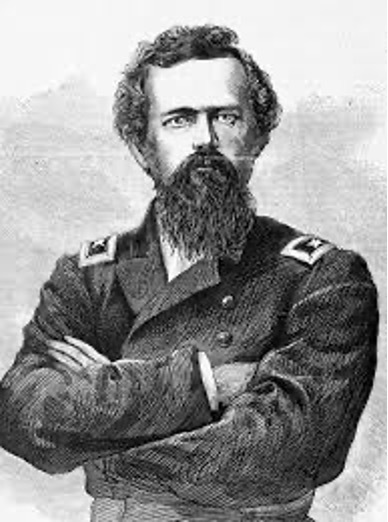
General Hawley, with pressure from the citizens of Wilmington, needed to find a new place for the refugees to live, not only to provide Wilmington some reprieve from the consequences of war, but also to provide ample opportunities for refugees to reestablish their lives.[29] Looking to surrounding refugee camps for inspiration and a guiding example, Hawley saw the perfect opportunity: relocate the refugees south, to Brunswick County, which was previously plantations and farmland. Because of the war and the proximity of these plantations to Fort Anderson, many of the lands were abandoned, allowing for refugees to gain independence and freedom.
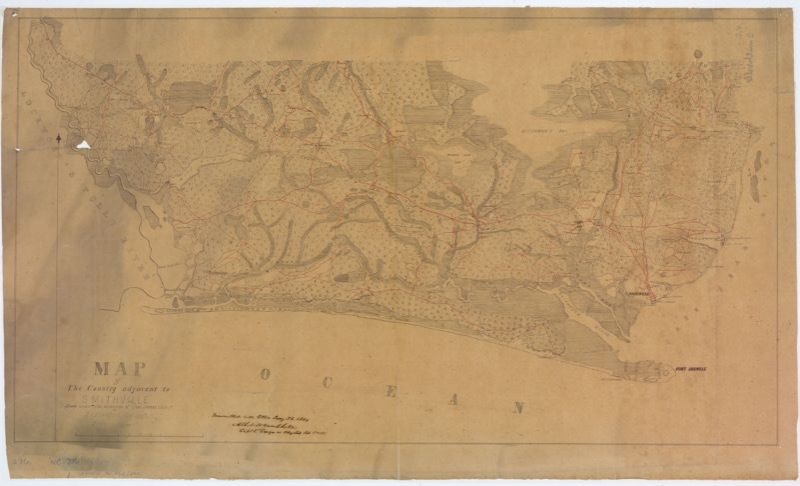
Initially, refugees lived in barracks on the property. But the barracks were often in disrepair; soldiers' accounts from January and February 1865 mention dirt floors, no doors, and comparing the space inside to the size of a garden shed or chicken coop.[30] These huts, ranging from 12 x 12ft to 16 x 16ft, often resembled log cabins and were the most sophisticated of the structures. Constructed in the winter, they would often include a chimney and a hearth for warmth and cooking. Other shelters include tents, mainly the Sibley tent, which involved a makeshift pole, about 12 feet long, and a circular cloth. When draped, the cloth would make a cone shape, offering space for about 20 individuals.[31] Soon, refugees took it upon themselves to venture to surrounding areas, including plantation property, and started to settle their own homesteads. These properties included the Orton Plantation, Lilliput Plantation, Grovely Plantation, Pleasant Oaks Plantation, and Kendal Plantation.